A Crossed Letter title
Nature Printed
Two rare species a month, as the old naturalists drew them and as we understand them now.
Founding offer15% off your first issue for the first 20 subscribers, until 15 November. It comes off automatically at checkout.
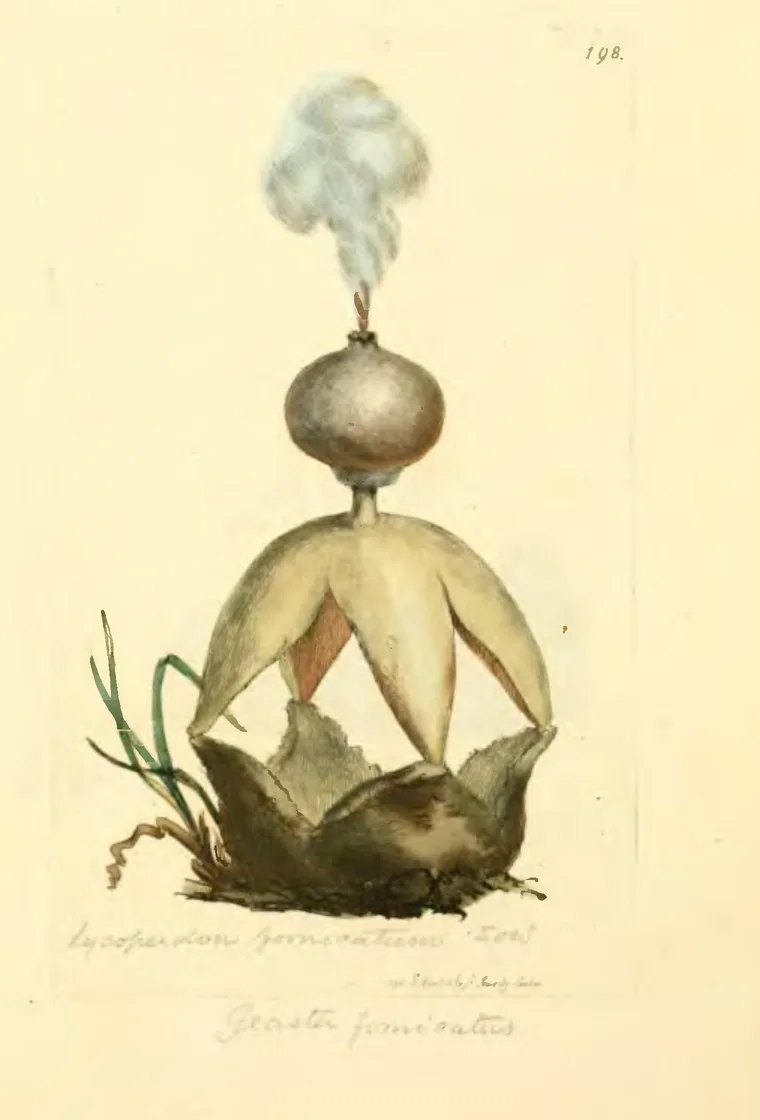
No. I, posted in the last week of October 2026
The arched earthstar and the sandy stiltball
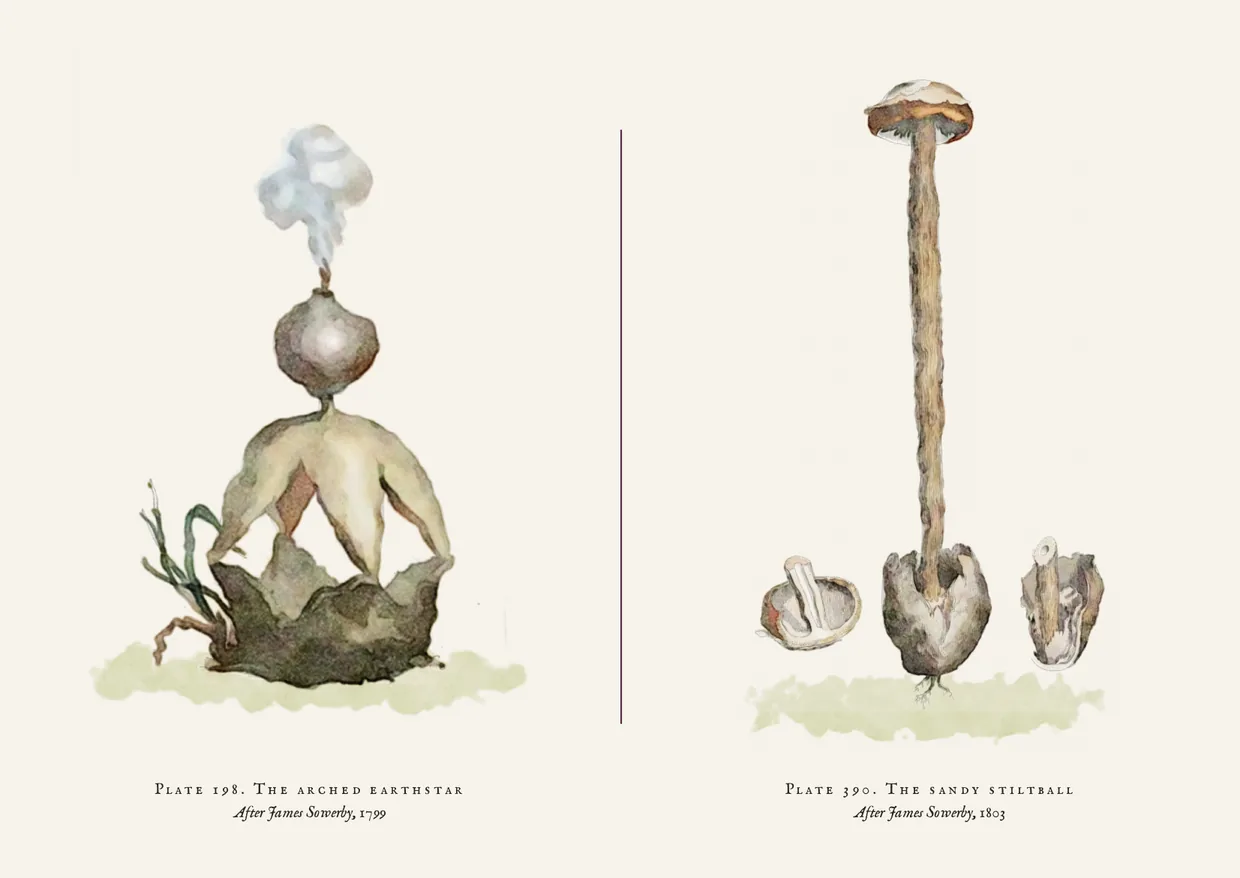
The arched earthstar
Geastrum fornicatum, plate 198
A spore sac held up on four arched legs, standing in a cup. In 1695 it was drawn with a human face and named the man-shaped fungus. It grows mostly under old yews, and is listed as Vulnerable in Britain.
The sandy stiltball
Battarrea phalloides, plate 390
A shaggy stem that can reach 40cm, rising from an egg in dry, sandy banks. It is known from only a few places in Britain, and has been protected by law since 1998.
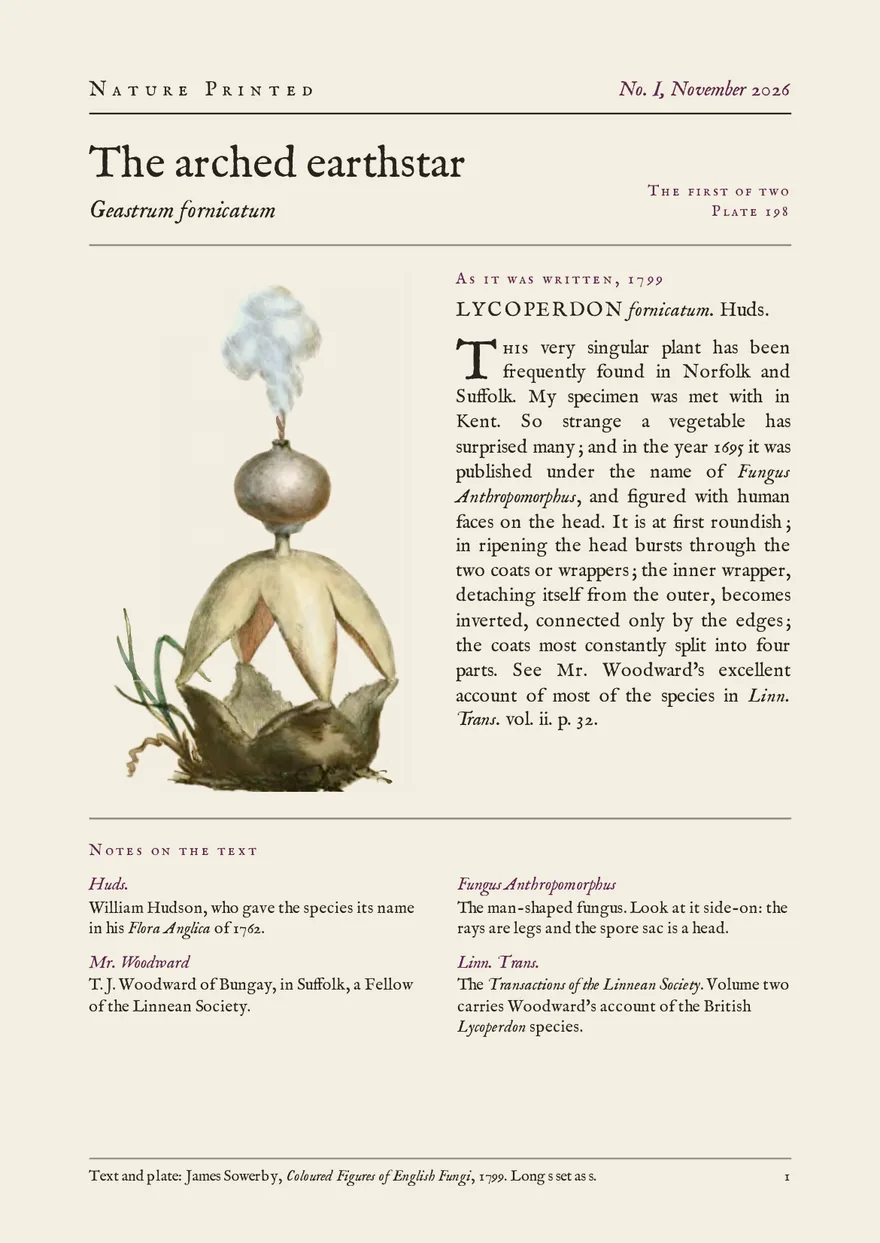
The year ahead
One theme a month
No. I is the fungi. The themes after it are on our desk now, as proofs, and which month each one takes is still being decided.
-
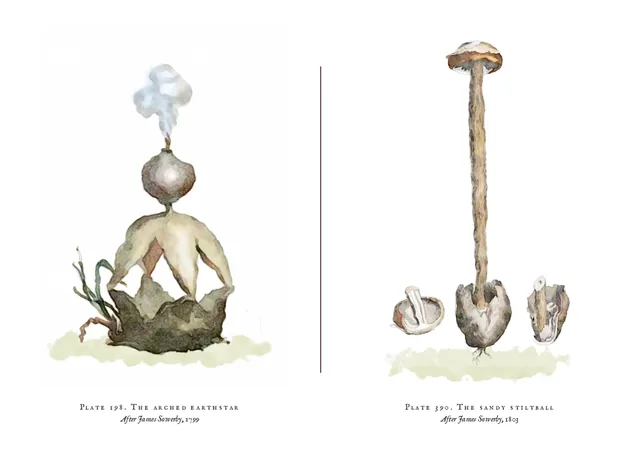 No. I, October
FungiThe hidden kingdom
The arched earthstar and the sandy stiltball
-
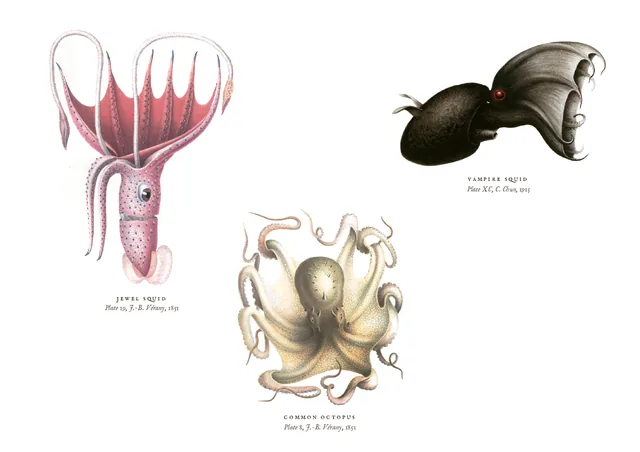 In preparation
Octopus and squidThe kraken’s kin
The jewel squid, the vampire squid and the common octopus
-
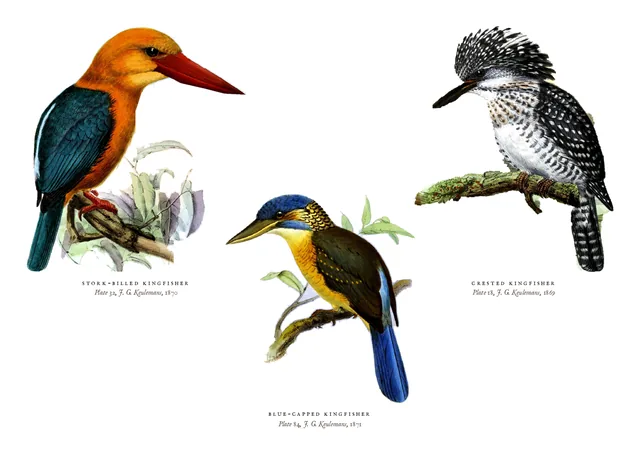 In preparation
KingfishersHalcyon days
The stork-billed kingfisher, the crested kingfisher and the blue-capped kingfisher
-
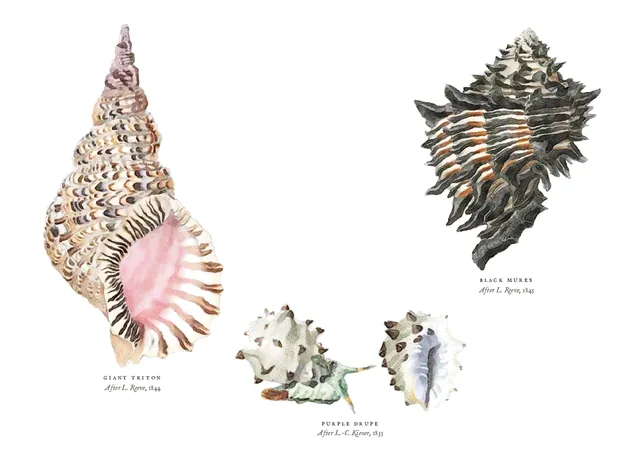 In preparation
ShellsThe trumpet and the purple
The purple drupe, the black murex and the giant triton
-
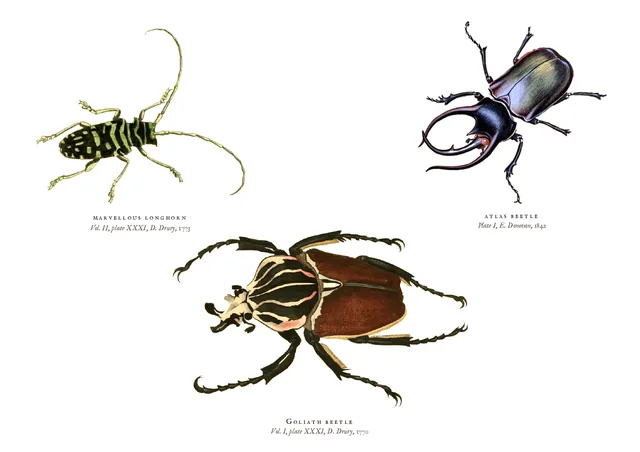 In preparation
BeetlesScarabs, stags and Goliaths
The Goliath beetle, the marvellous longhorn and the atlas beetle
-
 In preparation
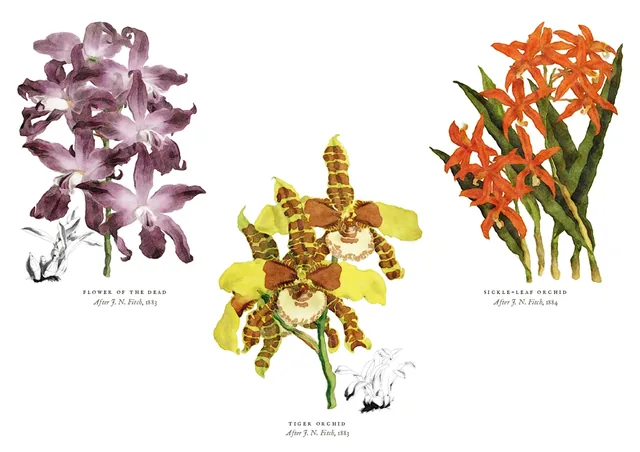
OrchidsOrchid fever
The flower of the dead, the tiger orchid and the sickle-leaf orchid
In each issue
The envelope
Coloured for the month’s theme, with a herbarium label naming the species inside, to immerse you in their world from the moment it lands in your mailbox.
The vellum wrap
Translucent vellum, printed for each theme like a herbarium folder and wrapped around everything inside. Turn it over for a surprise that changes with every theme.
The theme leaf
An introduction to the month’s theme: the myths, legends and strange history on the front, and the science of the whole family on the back.
The sheet
Each species in full: its original description, set as it was first printed, then what we know now and where to see one.
The postcard
The month’s species together, from the original plates, ready to be framed or mailed.
The bookmark
The month’s species, lifted from the original plates, with their Latin and common names.
On the sheet: three voices
The original description, set as it was printed, with its capitals and italics left as they were.
A short modern note: what the old naturalists got right, what they got wrong, and how the species is doing today.
Where and when to look, how rare it is, and what to do if you find one
What we go looking for
We go looking for the things most people walk straight past. A fungus that stands on four legs and breathes out smoke. A lichen that grows a millimetre a year and may have held the same stone for centuries. A sea slug dressed in colours no painter would dare. Strange and beautiful lives, hiding in hedgerows, under old yews and in rock pools, waiting for someone to stop and look.
Rare fungi, county floras, lichens and marine life: not the prints you’ve already seen on every poster, but the ones that make you look twice. We find them in the great illustrated works of the Georgian and Victorian naturalists:
- Coloured Figures of English Fungi or Mushrooms, by James Sowerby, 1797–1809
- Curtis’s Botanical Magazine, from 1787
- English Botany, by James Sowerby, 1790–1814
- and other works on birds, insects, lichens and sea creatures
Why we post it
Nature Printed is an invitation to slow down.
Once a month, something real comes through your letterbox: not a screen to scroll, but a sheet to unfold, a card to keep and a bookmark for whatever you’re reading. Read it with a cup of tea. Learn two new names. Then take them outside with you.
We hope it brings you the pleasure of learning something new, a deeper love for the beauty of the natural world, and a slower pace of life, where the small things get noticed again.
Give it as a gift
A present that keeps arriving.
For anyone who stops to look at a mushroom, or turns over stones in a rock pool: each month, something real through their letterbox, and two new names to take outside.
Put their address at checkout. Use your own email and card, and their name and address under Delivery address. Sending it abroad? Switch to posting outside the UK at the top of the checkout.
Give as many months as you like. When you want the gift to end, cancel in Manage your subscription. No more payments are taken, and they still get any issue you’ve paid for.
For Christmas: subscribe by 20 November and their first issue is posted in the last week of November. Subscribe by 20 December and it’s posted in the week after Christmas.
More ideas: gifts for nature lovers.
Subscribe
Nature Printed, posted to you each month
- US$10 a month, postage included.
- Founding offer: 15% off your first issue for the first 20 subscribers, until 15 November. It comes off automatically at checkout.
- You pay when you subscribe, then on the same date each month.
- Issues post in the last week of each month. Subscribe by the 20th to get that month’s issue.
- Cancel any time in your account. No more payments are taken, and you still get any issue you’ve paid for.
Payment is taken securely by Stripe. By subscribing you agree to our terms of sale, which include your right to cancel in the first 14 days.
Already subscribed? Manage your subscription.
Not ready yet?
Leave your email and we’ll write when each new issue is on its way, with a look at the species inside.